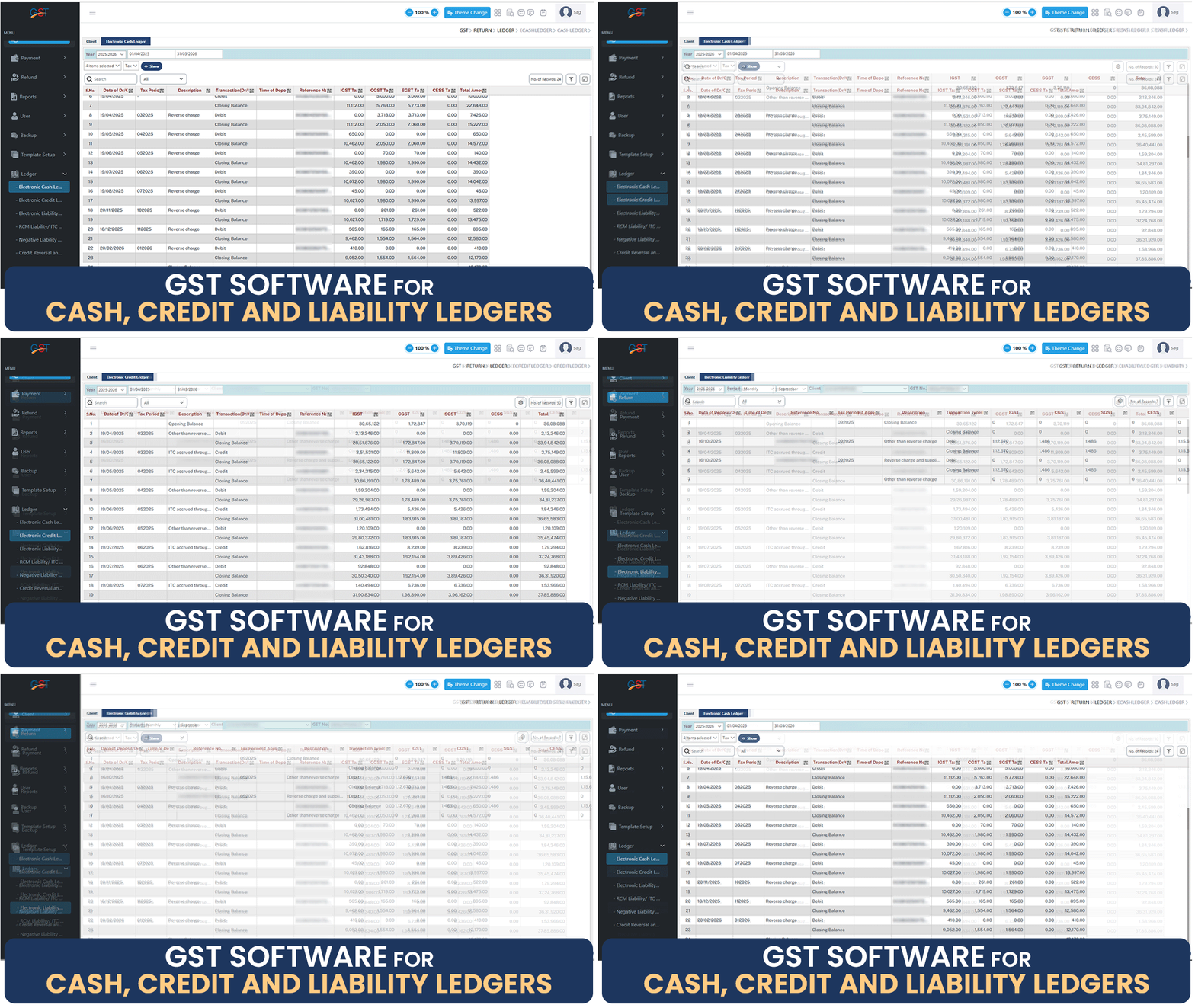
In India, Goods and Services Tax (GST) compliance is based on three electronic ledgers: the cash ledger, the credit ledger, and the liability ledger. Managing such ledgers manually can be intricate, error-prone, and time-consuming for businesses and tax professionals. To facilitate the procedure, the GST software is available, which automates ledger management, ensures accuracy, and maintains real-time compliance with GST norms.
Understanding the Three GST Ledgers
Before diving into how software manages these ledgers, it’s essential to first understand their purposes.
Electronic Cash Ledger: This ledger shows the deposits made by a taxpayer for tax, interest, penalties, or other dues. It functions like a digital wallet.
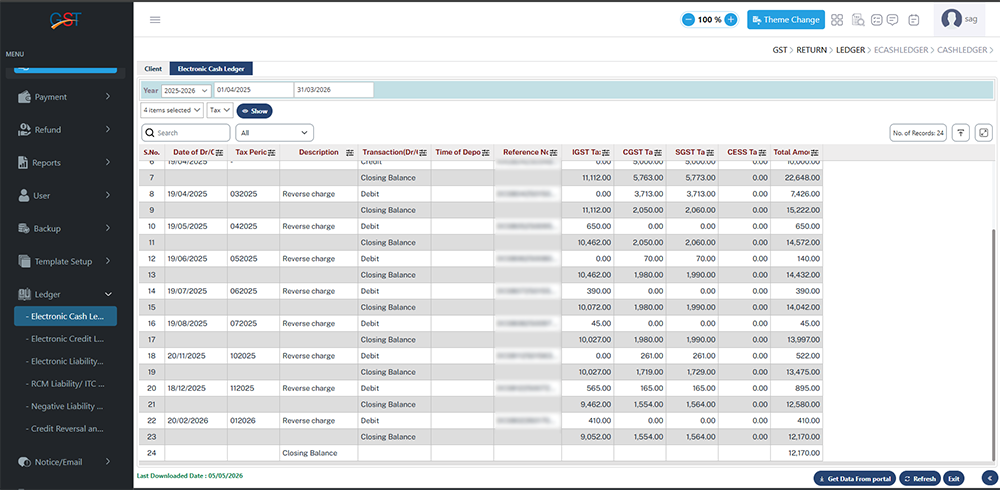
Electronic Credit Ledger: This ledger includes the Input Tax Credit (ITC) earned on purchases, which can be used to offset output tax liability.
Electronic Liability Ledger: This ledger records the total tax obligation of a taxpayer, along with the payable taxes, interest, late fees, and penalties.
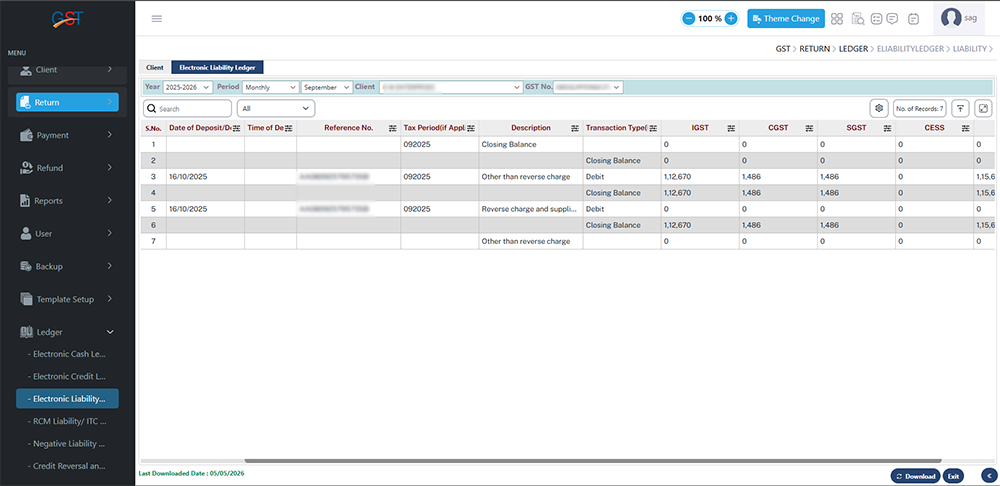
The ledgers interact dynamically at the time of filing GST returns and processing payments.
Cash Ledger Management
The handling of the electronic cash ledger is streamlined under the GST software by automating procedures-
- Seamless Challan Generation: The software allows users to generate GST challans (PMT-06) directly, lowering manual effort and errors.
- Real-Time Balance Tracking: Users can view updated cash balances after deposits are made.
- Automated Payment Adjustment: During return filings like GSTR-3B, the software adjusts available cash towards tax liabilities.
- Integration with Banking Systems: Many GST software integrate with payment gateways or banks, ensuring faster and more secure transactions.
It removes the need to manually track payments and lessens the chances of an insufficient balance when filing a return.
Effective Management of the Credit Ledger
An electronic credit ledger is among the important components of GST compliance. It impacts tax outflow. GST software improves its management in the following ways:
- Auto-Population of ITC Data: Input tax credit is auto-fetched from GSTR-2B or purchase data, ensuring precision.
- Reconciliation Features: Advanced reconciliation tools match purchase records with supplier filings to identify ITC mismatches.
- Eligibility Validation: The software verifies whether ITC is eligible under GST rules, reducing compliance risks.
- Optimised ITC usage: It applies ITC in the accurate order (IGST, CGST, SGST) while offsetting liabilities.
Read Also: Why You Need Sales Reconciliation in the GST Software
GST software automates these tasks to ensure that businesses maximise their ITC claims without breaching statutory norms.
Managing the Liability Ledger with Precision
The liability ledger shows the total tax liability of a taxpayer. GST software assures accurate management via-
- Auto-Calculation of Tax Liability: As per the sales data, the software computes GST payable under different tax heads.
- Inclusion of Interest and Penalties: Any delays or discrepancies are automatically accounted for in the liability ledger.
- Real-Time Updates: The ledger is updated instantly after return filing or payment adjustments.
- Return Integration: Data from returns like GSTR-1 and GSTR-3B feeds into the liability ledger, maintaining consistency.
It lessens manual calculations and ensures that obligations are precisely recorded and settled.
Intelligent Ledger Set-Off Mechanism
GST software has the feature of automating the set-off procedure between the three ledgers:
- ITC from the credit ledger is used first to offset liabilities.
- Remaining liabilities are adjusted via the cash ledger.
- The system complies with GST-specific utilisation rules to prevent errors.
The same automated set-off confirms compliance with the norms of the government and removes the confusion of tax adjustments.
Real-Time Synchronisation with GST Portal
Modern GST software integrates with the portal via APIs. The same allows-
- Live Ledger Updates: Any transaction or filing is reflected instantly.
- Accurate Data Fetching: Ledgers are synced with official GST records.
- Reduced Reconciliation Effort: Differences between software and portal data are reduced.
This synchronisation confirms transparency and precision in compliance.
Audit Trail and Reporting
GST software keeps a detailed audit trail of all ledger transactions-
- Every entry, adjustment, and reversal is recorded.
- Users can generate ledger reports for a specific period.
- Easy compliance during audits and assessments.
These reports assist businesses in being ready for GST scrutiny and in keeping accurate documentation.
Error Reduction and Compliance Assurance
Manual ledger management often leads to errors like:
- Wrong ITC claims
- Misallocation of payments
- Inaccurate liability calculations
GST software lessens such risks via validation checks, automated workflows, and rule-based processing. The same confirms that businesses stay compliant and prevent penalties.
Benefits for Businesses and Professionals
GST software automates the ledger management and furnishes various benefits:
- Saves time and lessens manual workload
- Improves precision and compliance
- Furnishes real-time financial visibility
- Eases return filing and tax payment
- Enhances decision-making with detailed insights
It eases client management and compliance procedures for CAs and tax professionals.
Closure: Managing GST ledgers, cash, credit, and liabilities is an intricate but important part of tax compliance. GST software eases the same procedure as it automates calculations, furnishes real-time updates, and ensures stringent compliance with GST provisions. The software transforms how businesses handle their tax responsibilities, making it easy to generate challans, utilise Input Tax Credit (ITC) efficiently, and accurately track liabilities.
As GST regulations continue to evolve, using reliable GST software is essential for ensuring efficient and error-free compliance.